Inflation Is Back at 4.2%: How to Protect Your Budget in 2026

Junior Y.
Founder, Spendify

Inflation is no longer a 2022 story. The Bureau of Labor Statistics report released June 10, 2026 showed consumer prices rose 4.2% over the past year, the highest annual reading in about three years, with prices up 0.5% in May alone. A week later, on June 17, the Federal Reserve responded by holding its benchmark rate steady in the 3.50% to 3.75% range rather than cutting. Translation: the “relief is coming” plan a lot of households were running on is paused.
Here’s the good news. You can’t control CPI, but you can control whether your budget is built on today’s prices or last year’s. This post is about the concrete moves that defend your money when inflation re-accelerates, in real dollars, not affirmations.
What 4.2% actually costs you
Percentages feel abstract until you put them on your own spending. Take a household spending $5,000 a month on everything: housing, food, transportation, the lot. At 4.2% annual inflation, holding your lifestyle exactly constant costs an extra ~$210 a month, or about $2,520 over the year, just to stand still.
And that 4.2% is an average. The categories you can’t skip tend to run hotter:
- Groceries have been a persistent pressure point, a place where the headline number understates what people feel at the register. (We broke down one driver in how tariffs hit your grocery bill.)
- Insurance, auto and home, has posted outsized increases in many states.
- Rent and housing remain the heaviest single line in most budgets, so even modest percentage increases move real dollars.
The lesson isn’t “panic.” It’s that a budget you set in 2024 is now quietly under-funded, and the gap gets filled by either savings or a credit card unless you adjust on purpose.
Move 1: Re-baseline your budget to today’s prices
The most common budgeting mistake during inflation is treating last year’s numbers as this year’s reality. A 50/30/20 budget, 50% needs, 30% wants, 20% savings and debt, is a great framework, but only if the dollar amounts behind each bucket reflect what things actually cost now.
Pull your last two or three months of real spending and compare it to your plan. Where needs have crept past 50%, you have a decision to make, not a moral failing to feel bad about. Maybe wants flex down temporarily. Maybe the savings rate dips for a quarter while you stabilize. The point is to make that trade consciously, on paper, instead of discovering it as a shrinking bank balance.
Move 2: Find where the increase is hiding
Not every category inflates equally, and not every increase deserves the same response. Sort your spending into three responses:
| Response | Which categories | What to do |
|---|---|---|
| Absorb | Non-negotiables that rose (groceries, insurance, utilities) | Fund them honestly; cut elsewhere to make room. |
| Cut | Wants that crept up without adding value | Trim or pause, this is your release valve. |
| Lock | Predictable big expenses (annual premiums, holidays) | Pre-fund with a sinking fund so they don’t become a card balance. |
This is also the moment to watch for lifestyle creep, the slow upgrade of “wants” into “needs” that inflation makes easy to rationalize. When everything is more expensive, “it all just costs more now” becomes the excuse that hides genuinely optional spending. Naming each increase as absorb, cut, or lock forces the distinction.
Move 3: Stop letting your cash quietly lose value
Inflation is a tax on idle cash. A dollar sitting in a checking account earning nothing lost 4.2% of its purchasing power over the past year. The defense is making sure money you don’t need immediately is at least keeping pace, earning a competitive yield instead of zero.
There’s nuance here, because savings rates themselves are shifting. We cover the current environment, and when it makes sense to lock a rate in, in high-yield savings rates are falling: should you lock in a CD?. The headline: don’t let “I’ll deal with it later” leave a large balance earning nothing while prices climb.
Move 4: Attack variable-rate debt while rates are high
When the Fed holds rates high to fight inflation, exactly what it did on June 17, variable-rate debt stays expensive. Credit card APRs remain clustered well above 20% for many borrowers. (We unpacked why so many households are stuck there in why 111 million Americans can’t pay their credit cards.)
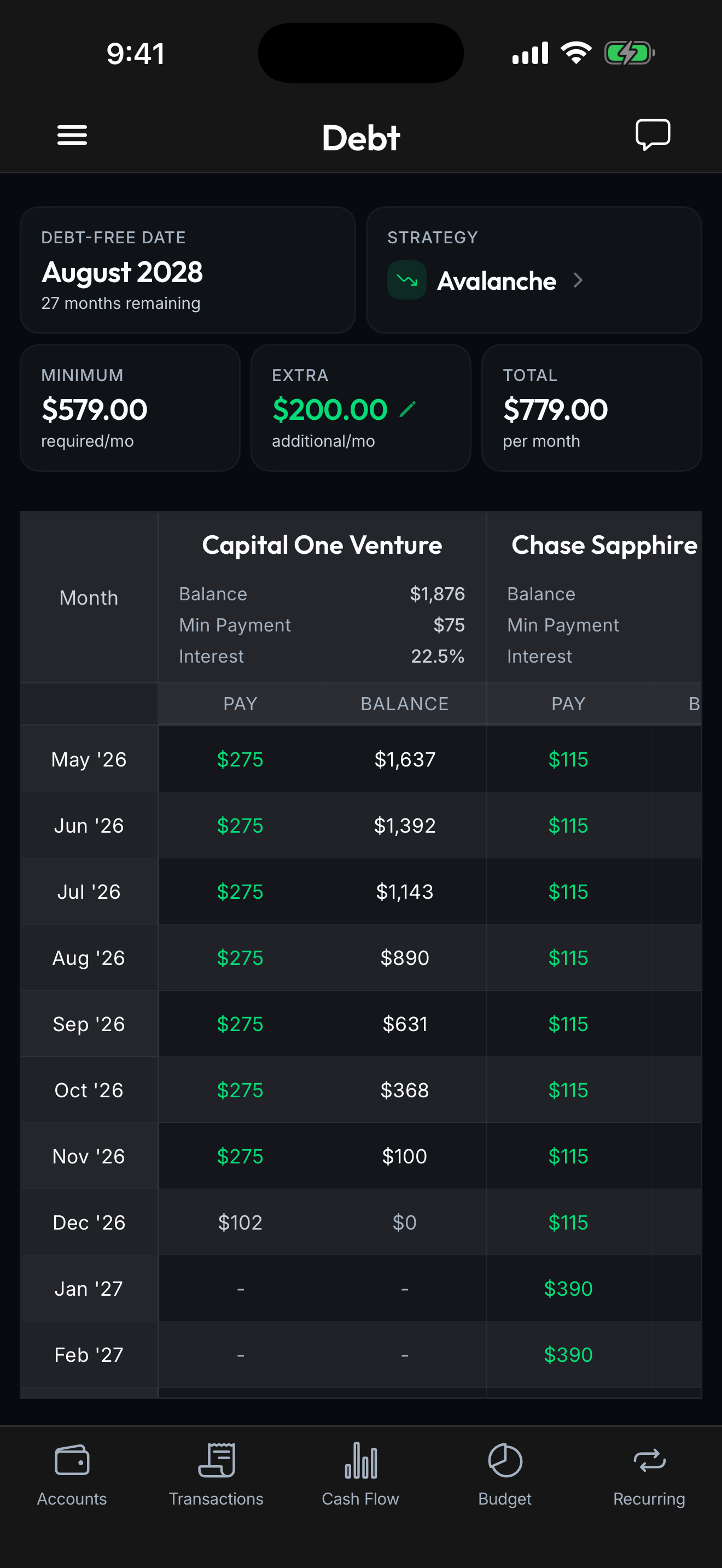
That makes high-interest debt the single best place to put a defensive dollar. Clearing a 24% balance is a guaranteed 24% return, better than nearly anything else you could do with the money, and it shrinks a payment that inflation is making harder to cover. Inflation strengthens the case for an aggressive payoff plan; it doesn’t weaken it.
The mindset that survives a high-inflation year
The households that come through a year like this in good shape aren’t the ones who found a magic frugality hack. They’re the ones who looked at the real numbers early, made deliberate trade-offs, and revisited the plan when prices moved, instead of hoping the averages would spare them.
You don’t need to fight inflation everywhere. You need to know exactly where it’s hitting you, decide on purpose where to absorb it and where to cut, and keep your cash and debt working in your favor while rates stay high.
Where Spendify fits
Inflation makes the gap between your plan and your actual spending the thing that matters most. And that gap is exactly what most people can’t see month to month. Spendify pulls every account into one place, shows you which categories are actually running hot against your budget, and lets you run what-if scenarios so you can decide where to absorb a price increase and where to cut before the month gets away from you. No guesswork, no spreadsheet maintenance: just your real numbers, current.
$4.99/month or $49.99/year with a 7-day free trial. iOS + Android.
See the budgeting features → · Free budget calculator →
Related reading
- How Tariffs Are Hitting Your Grocery Bill in 2026, the specific driver behind food prices.
- The 50/30/20 Rule, Explained, the framework to re-baseline.
- Sinking Funds: How to Stop Big Expenses From Wrecking Your Month, pre-fund the predictable.
- What the Fed’s June 2026 Decision Means for You, why rates are staying high.