The Fed Meets This Week and Rate Cuts Are Off the Table: What to Do

Junior Y.
Founder, Spendify

The Federal Reserve meets June 16-17, 2026, and the mood has flipped. Just weeks ago the debate was when the Fed would start cutting rates. Now, with prices creeping back up, some officials are openly discussing the opposite, the possibility of rate hikes. A cut at this meeting is off the table, and “higher for longer” looks like the base case.
If you want the full breakdown of how higher rates ripple through debt, savings, and mortgages, we covered that in Fed Rate Hike Talk Is Back. This post is the timely update: what this week’s meeting signals, and the specific moves worth making now.
What’s actually happening
The Federal Open Market Committee wraps up its meeting on June 17. Economists broadly expect no change to the benchmark rate, but the commentary around it has shifted from “how soon do cuts come” to “could we see another hike.” Inflation data has been firmer than hoped, and a few Fed officials have said the quiet part out loud. Markets that were pricing in cuts have repriced accordingly.
For your money, the practical takeaway isn’t about predicting the exact path. It’s that relief isn’t coming from the Fed right now. Plan around the rates you have, not the rates you’re hoping for.
What it means for your debt
This is the most important one. Credit card APRs are tied closely to the Fed’s benchmark, so if rates hold high or rise, your variable APR holds high or rises too. With the average card carrying a punishing rate, waiting for the Fed to bail you out is a losing strategy.
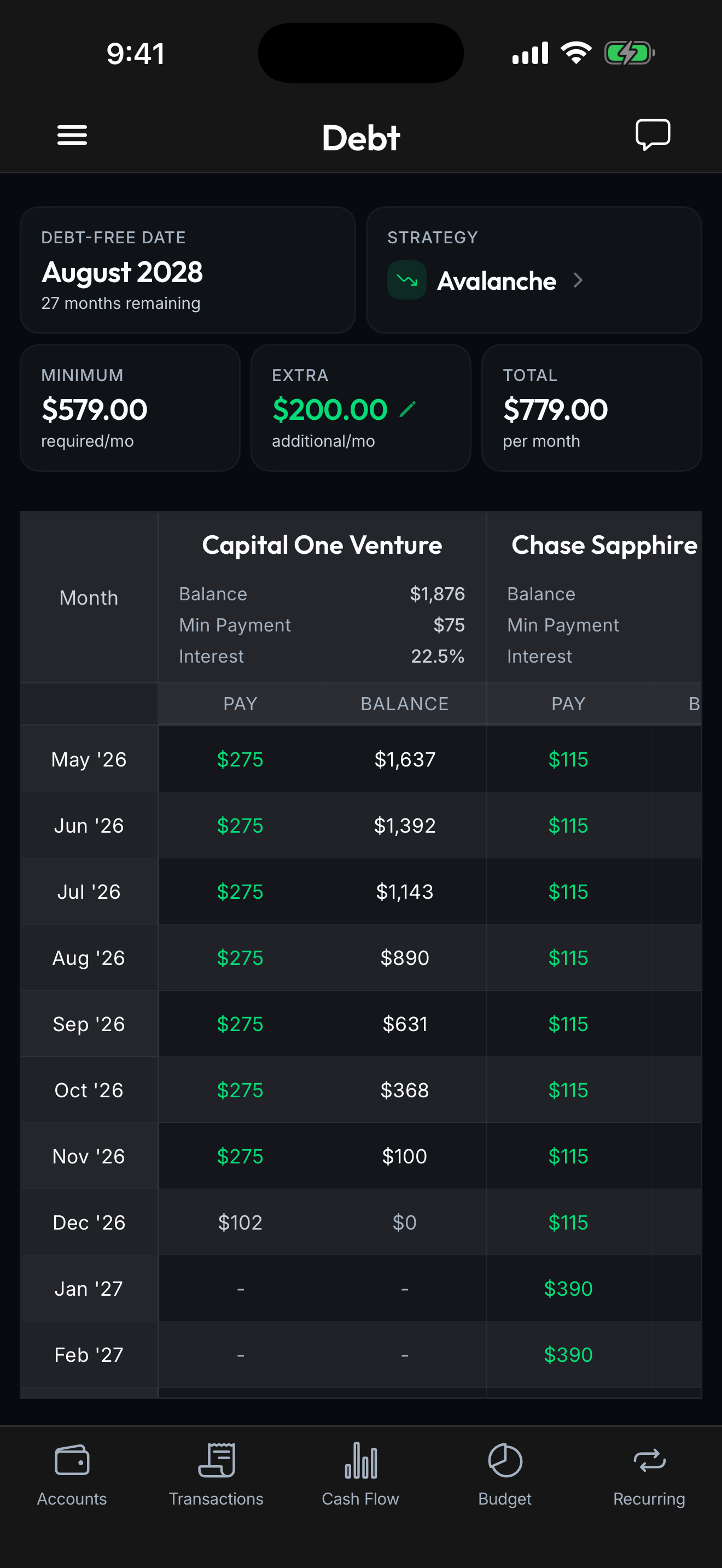
The highest-return move available to most people is paying down high-interest debt. Every dollar of principal you wipe out avoids interest at today’s elevated rates, effectively a guaranteed return equal to your APR. Our free debt payoff calculator shows exactly how much interest you save and how many months you shave off by putting extra toward your balances now.
A couple of tactics that work especially well in a high-rate environment:
- Attack the highest-APR balance first (the avalanche method) to minimize interest while rates are elevated.
- Be skeptical of balance-transfer offers. They can help, but the math is trickier than it looks when rates are high. We broke down the truth about balance transfer cards.
- Pick a tool that keeps you on track. The best debt payoff apps calculate your debt-free date and adjust as you pay.
What it means for your savings
There’s a silver lining to higher-for-longer: cash still earns real yield. High-yield savings accounts and CDs are paying rates that looked unthinkable a few years ago.
- CDs: Yields often fall fast the moment the Fed signals a cut, even a hint. If you have cash you won’t touch for a while, locking in a CD now captures today’s rate before any eventual decline.
- High-yield savings: These are variable and will drift down whenever rates fall, but for now they’re a strong home for your emergency fund. Make sure you actually have one before you funnel everything at debt.
What it means for mortgages
The average 30-year fixed mortgage sat around 6.5% in mid-June. Mortgage rates don’t track the Fed one-to-one, but with the Fed holding or eyeing hikes, a meaningful drop isn’t imminent. If you’ve been waiting on the sidelines for rates to tumble before buying or refinancing, it’s worth running the numbers on the home and payment that work at today’s rate rather than betting on a cut that keeps getting pushed out.
What to do this week
- Don’t wait on the Fed to fix your debt. Redirect any spare cash to your highest-APR balance now.
- Lock in cash yields if you have money earmarked for a CD.
- Stress-test your budget against rates staying high. If a variable payment ticks up, where does the money come from?
- Keep your emergency fund intact so a surprise doesn’t push you back onto high-rate credit.
Where Spendify fits
When rates stay high, the margin for error in your budget gets thinner, which is exactly when seeing everything in one place matters most. Spendify tracks your spending, savings, and every debt balance together, so you can watch a variable APR’s real cost, decide whether this month’s spare cash should attack a card or top up savings, and see your debt-free date move as rates do. It turns “higher for longer” from a headline into a plan.
$4.99/month or $49.99/year with a 7-day free trial. iOS + Android.
See the debt payoff features → · Free debt payoff calculator →
Related reading
- Fed Rate Hike Talk Is Back: What Higher Rates Mean for Your Money: the full breakdown of rates’ effect on debt, savings, and mortgages.
- The Truth About Balance Transfer Cards: when they help and when they hurt.
- Emergency Fund 101: How Much Do You Actually Need?: your buffer against high-rate debt.
- Free Debt Payoff Calculator: turn extra cash into a faster debt-free date.