Parent PLUS Borrowers: The July 1, 2026 Consolidation Deadline

Junior Y.
Founder, Spendify

If you took out a Parent PLUS loan to help pay for your child’s education, July 1, 2026 is a date to act on now, not later. A USA Today report on June 18 flagged the urgency: Parent PLUS borrowers who want to keep access to income-driven repayment and Public Service Loan Forgiveness may need to consolidate their loans into a Direct Consolidation Loan before the deadline, and consolidation takes weeks to process. Wait until late June and you may run out of runway.
This is the narrowest, most time-sensitive corner of the broader student loan overhaul taking effect July 1. If you want the full picture of the new repayment plans, start with our guides on the new 2026 repayment plans and what to do now that SAVE is gone. This post is specifically for Parent PLUS borrowers, because their deadline math is different, and easy to miss.
Why Parent PLUS loans are a special case
Parent PLUS loans are federal loans taken out by a parent, not the student. They’ve always been treated differently from the student’s own federal loans in one important way: on their own, they don’t qualify for income-driven repayment.
Income-driven repayment (IDR) plans cap your monthly payment at a percentage of your income, which is the lifeline that keeps federal loans affordable when the standard payment is too high. Parent PLUS borrowers can’t enroll directly. The long-standing workaround is:
- Consolidate the Parent PLUS loan into a Direct Consolidation Loan.
- Enroll that consolidated loan in Income-Contingent Repayment (ICR), historically the only IDR plan a consolidated Parent PLUS loan can use.
A second, more generous maneuver, the “double consolidation”, let some borrowers reach better income-driven terms by consolidating twice. That route is the one closing down, and it’s the reason the deadline matters.
What changes on July 1, 2026
The 2025 reconciliation law (the One Big Beautiful Bill Act) reshapes the federal repayment menu. For Parent PLUS borrowers, three things converge:
- New Parent PLUS borrowers are boxed in. Anyone taking out a Parent PLUS loan after July 1, 2026 can generally only use the Tiered Standard Plan, a fixed-payment plan with no income-driven option and no PSLF pathway on those loans.
- The double-consolidation route is closing. The more generous consolidation maneuver that some borrowers used to reach better IDR terms is being shut off as of the deadline.
- Older IDR plans are phasing out. ICR and PAYE are being wound down by 2028, which changes what a consolidated Parent PLUS loan can enroll in even for those who act in time.
The practical takeaway: if you’re an existing Parent PLUS borrower and you might ever need an income-driven payment, or you’re pursuing PSLF through qualifying public-service work, the window to consolidate on the more favorable terms is closing. Acting before July 1 preserves options that disappear after it.
Who should act before the deadline
You should look closely at consolidating before July 1 if any of these describe you:
| Situation | Why the deadline matters |
|---|---|
| Your standard Parent PLUS payment is unaffordable | The consolidate-then-ICR path is often the only way to get an income-based payment. That path narrows after July 1. |
| You work in qualifying public service (PSLF) | PSLF on Parent PLUS loans requires consolidation + a qualifying IDR plan. Preserve the pathway now. |
| You used or planned the “double consolidation” route | That route is closing. If you haven’t completed it, you likely can’t start after the deadline. |
| You have multiple Parent PLUS loans across servicers | Consolidation also simplifies them into one loan and one payment, and the favorable terms are time-limited. |
If your standard payment is comfortable, you’re not pursuing forgiveness, and you expect to pay the loan off on a fixed schedule, you may not need to do anything. But confirm that. Don’t assume it. The cost of being wrong here is losing access to a lower payment you might need later.
The steps, in order
Consolidation is a process, not a button. Give it time.
- Inventory your loans. Log in at studentaid.gov and confirm exactly which loans are Parent PLUS and which servicer holds them. You can’t plan around loans you’ve miscounted.
- Run the numbers first. Use the Department of Education’s Loan Simulator to compare your payment and lifetime cost under consolidation + ICR versus staying put. The same payoff math powers our free debt payoff calculator, model it before you commit.
- Check the forgiveness-count impact. This is the step most likely to cost you. Consolidating creates a new loan and can affect payment counts toward forgiveness. Confirm with your servicer how your existing counts carry over before you file.
- Apply to consolidate, early. Processing can take several weeks. A consolidation application that’s still in the queue on July 1 may not protect you. Submit with margin.
- Enroll in the income-driven plan once consolidation completes, and keep written confirmation of your plan and payment.
When the decision gets emotional, and a five- or six-figure parent loan is emotional, anchor on the concrete thing you’re protecting: the option to make an income-based payment if your circumstances change. That option is what the deadline takes away.
Don’t let the default decide for you
The recurring theme across every part of this year’s student loan overhaul is the same: if you do nothing, the system picks for you, and it rarely picks the cheapest option. For SAVE borrowers, that meant being dropped into a less flexible plan (the playbook is here). For Parent PLUS borrowers, doing nothing before July 1 can quietly close the door to income-driven repayment on loans you may be paying for another decade.
A deliberate decision, even a decision to do nothing, made after running the numbers, beats a default every time.
Where Spendify fits
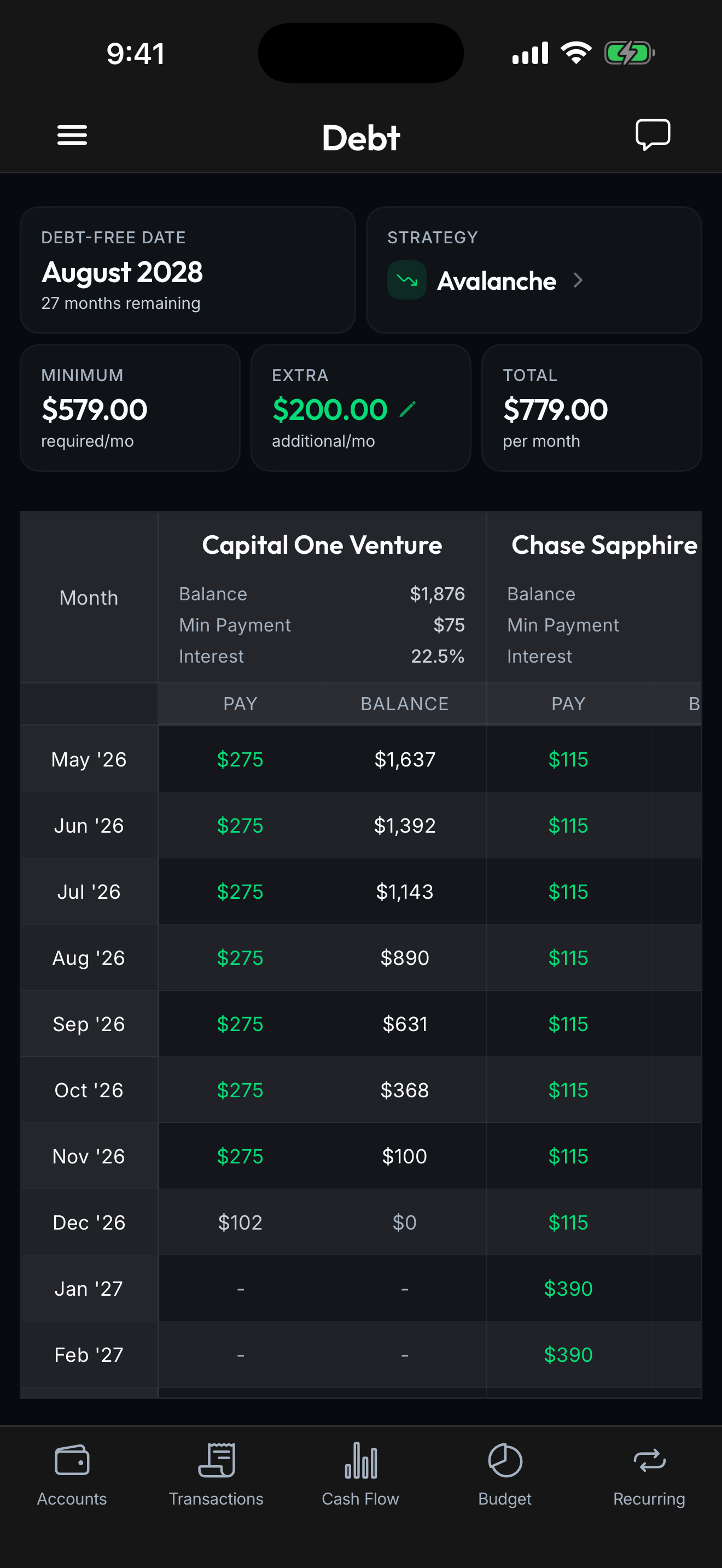
A Parent PLUS payment rarely sits alone. It competes with your own retirement savings, your mortgage, and everything else in a household budget that’s often supporting two generations at once. Spendify pulls all of it into one place so you can see whether a consolidated income-driven payment actually fits your month, model what consolidating does to your timeline in real dollars, and track the balance as it falls. It won’t file your consolidation, that’s between you and your servicer, but it will show you, honestly, what each choice does to the rest of your finances before you commit.
$4.99/month or $49.99/year with a 7-day free trial. iOS + Android.
See the debt payoff features → · Free debt payoff calculator →
Related reading
- The New Student Loan Repayment Plans in 2026 (RAP & Tiered Standard), how the new plan menu works.
- The SAVE Plan Is Gone: What to Do Before July 1, the deadline playbook for SAVE borrowers.
- Student Loan Payoff Calculator: The 2026 Guide, how to actually get out of debt, not just stay current.
- Built for student-loan borrowers →, how Spendify handles loans specifically.