7 Tax Changes for 2026 That Could Put More Money in Your Pocket

Junior Y.
Founder, Spendify
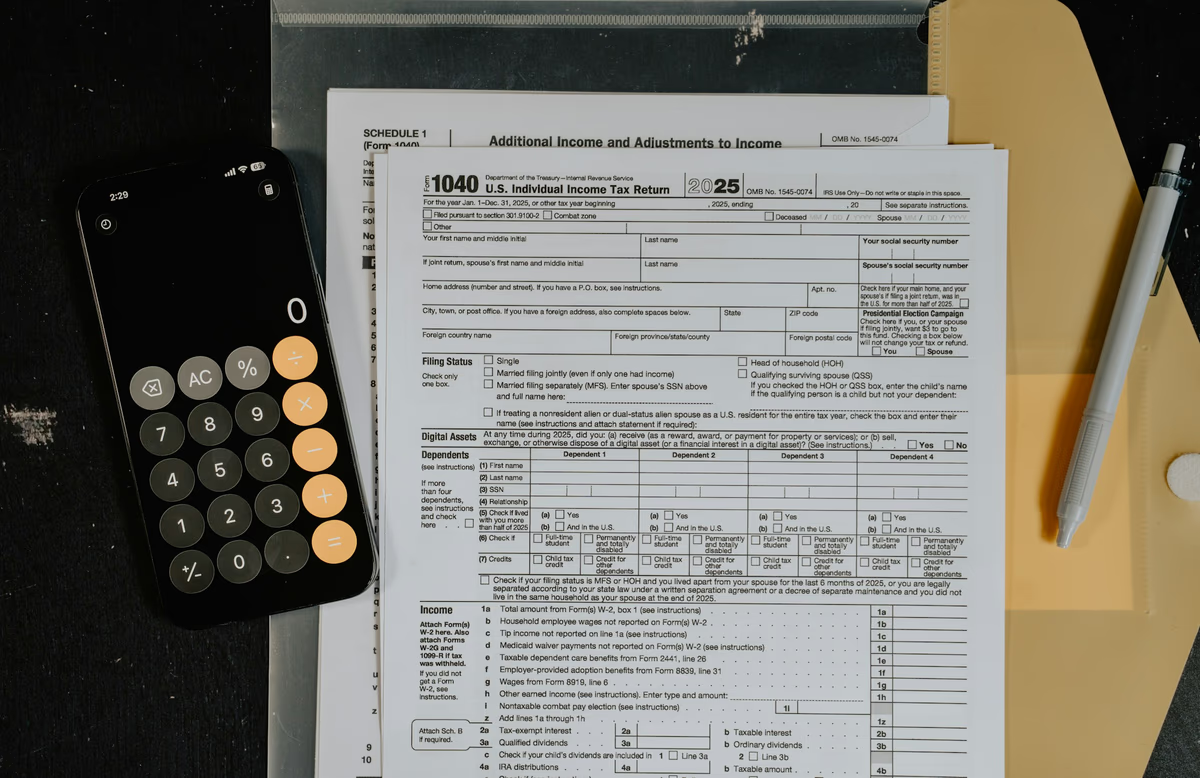
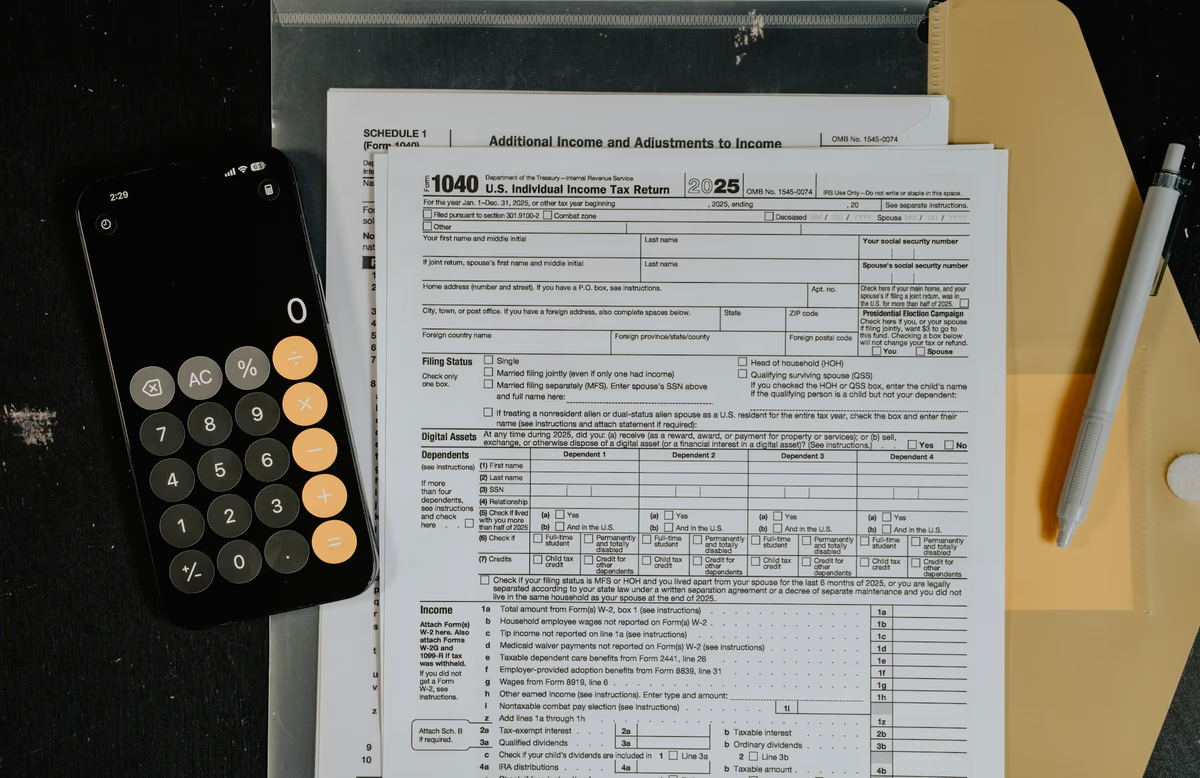
The 2026 filing season comes with the biggest set of tax changes in years, courtesy of the One Big Beautiful Bill Act (OBBB). Several apply to the 2025 tax year, the return you file in early 2026, and beyond. A few could meaningfully lower your bill or boost your refund.
Here are seven worth knowing. (This is general information, not tax advice. Confirm the details for your situation with the IRS or a tax professional, since many of these provisions phase out at higher incomes and several are temporary.)
1. A bigger standard deduction
If you’re among the roughly 90% of filers who take the standard deduction, it’s going up by more than usual. On top of the normal annual inflation adjustment, OBBB added an extra 5% increase to the standard deduction starting with the 2025 tax year. That’s a small but automatic reduction in your taxable income. No action required.
2. The SALT cap jumps from $10,000 to $40,000
The deduction for state and local taxes (SALT), state income or sales tax, plus property tax, was capped at $10,000 from 2018 through 2024. For 2025, that cap rises to $40,000 for single filers and married couples filing jointly. If you live in a high-tax state or own a home with a sizable property-tax bill, this is potentially the single biggest change on this list. It only helps if you itemize, so run the math both ways.
3. A new deduction for car loan interest
This one’s genuinely new: you can deduct up to $10,000 of interest paid on a loan for a new (not used) car, minivan, van, SUV, pickup, or motorcycle. The catch: the vehicle’s final assembly must have taken place in the U.S. (you can check via the VIN decoder on the NHTSA website), and the deduction phases out once your modified adjusted gross income passes $100,000 ($200,000 for joint filers), dropping $200 for every $1,000 over the line.
4. A new deduction for people 65 and older
Taxpayers 65+ get a new deduction of up to $6,000 (up to $12,000 if both spouses qualify and file jointly). It’s separate from the regular standard deduction and the existing bonus standard deduction for seniors, and you can claim it whether you itemize or not. It phases out at higher incomes (around $175,000 of MAGI for individuals, $250,000 for couples) and is on the books only through the 2028 tax year.
5. A deduction for tipped income
Workers who earn tips can deduct a portion of that income under a new, temporary OBBB provision for tax years 2025 through 2028. If a meaningful share of your pay comes from tips, this is worth flagging to whoever prepares your return.
6. A deduction for overtime pay
Similarly, there’s a new deduction of up to $12,500 (or $25,000 for joint filers) on overtime compensation, also available for 2025 through 2028 and subject to income phase-outs. If you regularly work overtime, the savings can add up.
7. What to actually do with the savings
A lower tax bill or a bigger refund is only useful if you put it to work. The worst outcome is letting a few hundred (or few thousand) extra dollars quietly evaporate into everyday spending.
- If you carry high-interest debt, a refund is one of the fastest ways to knock down a balance. Running it through our free debt payoff calculator shows exactly how many months and how much interest a lump sum saves you, and our guide on stretching your tax return covers the smartest order to use it.
- If you’re building a budget, fold the savings into your plan deliberately. Our free 50/30/20 budget calculator helps you decide how much goes to savings versus debt versus everyday life.
Where Spendify fits
Tax savings don’t help if you can’t see them land. Spendify tracks your income, spending, and debt in one place, so when a bigger refund or a smaller withholding shows up, you can immediately route it toward a goal, like paying down a card or topping up an emergency fund, and watch the effect on your debt-free date in real time. Pair it with the best debt payoff apps roundup if you’re still choosing a tool.
$4.99/month or $49.99/year with a 7-day free trial. iOS + Android.
See the budgeting features → · Free budget calculator →
Related reading
- How to Stretch Your Tax Return: the smartest ways to deploy a refund.
- Free 50/30/20 Budget Calculator: decide how much to save, spend, and put toward debt.
- Free Debt Payoff Calculator: see what a lump sum does to your debt-free date.