AI Financial Advisors vs. Human Financial Advisors: What Actually Makes Sense in 2026

Junior Y.
Founder, Spendify

Everyone’s asking AI about money now
The New York Times recently profiled couples using ChatGPT for retirement planning. NerdWallet published a guide to AI-assisted financial goals. Nearly half of Americans have already used AI tools for personal finance questions.
This isn’t a trend that’s going to reverse. But it raises a real question: should you rely on AI for financial advice, or do you still need a human?
The honest answer is less dramatic than the headlines suggest.
What AI is genuinely good at
AI shines at tasks that involve your data, pattern recognition, and questions that have relatively straightforward answers.
Everyday spending questions. “How much did I spend on groceries this month?” “What’s my biggest expense category?” “Am I on track with my budget?” If your AI has access to your actual financial data, through something like Spendify’s MCP server, these answers are instant and accurate.
Subscription and recurring charge audits. AI can scan all your accounts, find every recurring charge, and calculate the total. A human advisor can do this too, but they’re going to charge $200/hour for it.
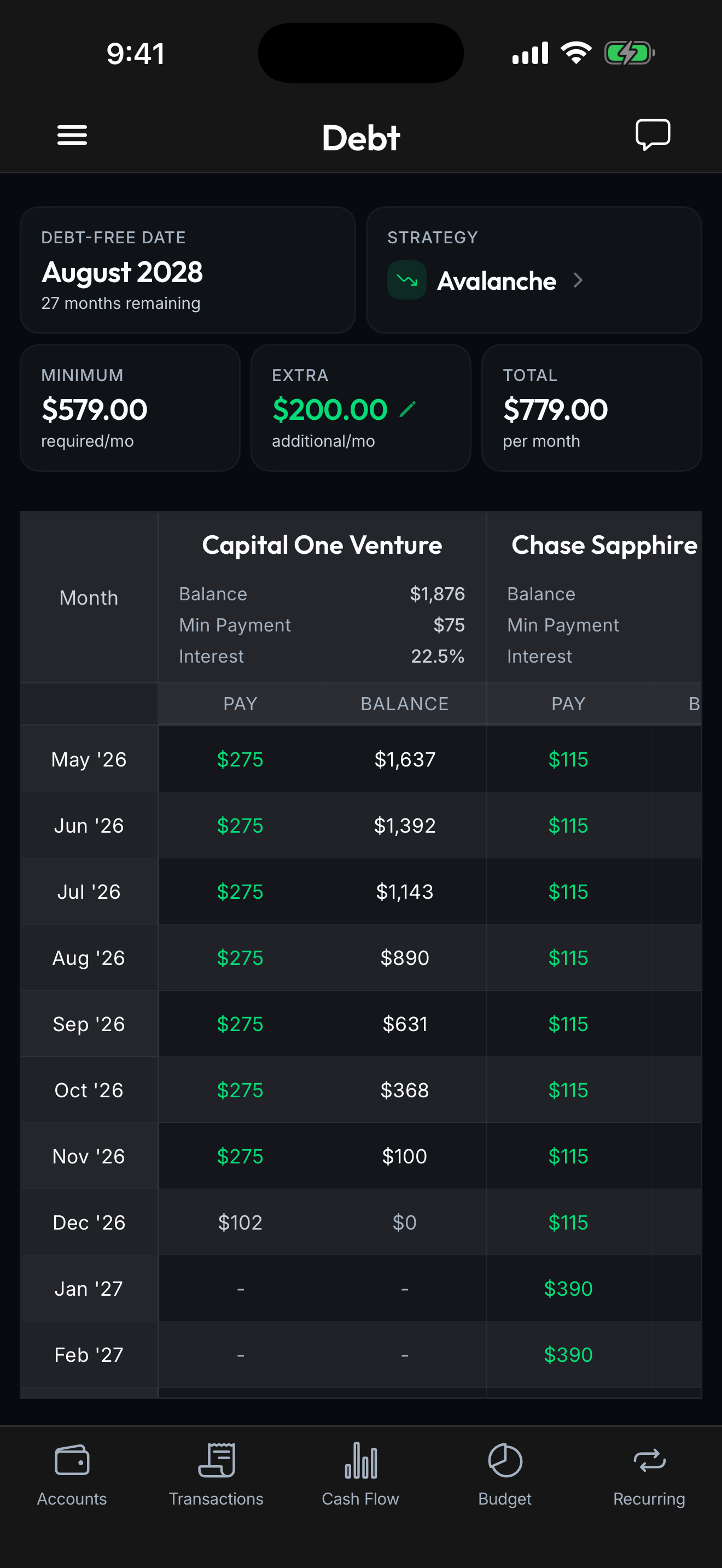
Debt payoff math. Snowball vs. avalanche, the impact of extra payments, estimated debt-free dates. These are calculations, and AI does calculations well.
Budget analysis. Comparing actual spending against targets, identifying trends over time, flagging unusual transactions. This is pattern recognition at scale.
Explaining concepts. “What’s a 401k match?” “How does compound interest work?” “Should I pay off debt or save?” AI gives solid, well-sourced explanations. Not always nuanced, but a good starting point.
What AI is genuinely bad at
AI struggles with anything that requires understanding your full life context, navigating ambiguity, or making judgment calls where the “right” answer depends on values and emotions.
Tax strategy. Tax optimization involves understanding your income sources, state residency, filing status, deductions, estimated future income, and dozens of other variables. It’s also one area where mistakes are expensive. AI can explain tax concepts. It shouldn’t be making your tax decisions.
Estate planning. Wills, trusts, beneficiary designations, power of attorney. These are legal documents with real consequences. AI can explain what they are. It can’t draft ones that hold up in court.
Insurance decisions. How much life insurance do you need? Disability insurance? Umbrella policy? These depend on your family situation, health, income, assets, and risk tolerance in ways that generic answers can’t capture.
Major life transitions. Getting married, having kids, changing careers, getting divorced, inheriting money, losing a job. These moments require someone who understands not just the numbers but the emotional and psychological weight behind them.
Behavioral coaching. This is the underrated value of human advisors. A good advisor stops you from panic-selling in a downturn or taking on too much risk in a bull market. AI can tell you not to panic-sell. Your advisor can talk you through it at 9 PM on a Tuesday when the market dropped 5%.
The real divide isn’t AI vs. human
The useful way to think about this isn’t “which one should I use?” It’s “which one for which question?”
Use AI for the operational layer. Day-to-day spending, budget tracking, subscription management, transaction categorization, quick financial calculations. These are high-frequency, data-heavy tasks where AI is faster, cheaper, and often more thorough than a human.
Use a human advisor for the strategic layer. Tax planning, estate planning, insurance, retirement projections with real complexity, and accountability during emotional financial moments. These are low-frequency, high-stakes decisions where nuance and judgment matter.
Most people don’t need a financial advisor for everyday money management. And most people don’t need AI for estate planning. Match the tool to the task.
The data problem that makes AI less useful
Here’s the thing most people don’t realize: when you ask ChatGPT or Claude a question about your finances without connecting your actual data, the AI is guessing. It gives you a generic answer based on averages and assumptions.
“How much should I spend on housing?” You’ll get the standard 30% rule. But the AI doesn’t know your income, your debt obligations, your location, or your savings goals.
Studies show AI hallucinations hit 27-41% on finance questions when there’s no real data to ground the answers. That’s not a failure of intelligence. It’s a data problem.
This is why connecting your actual financial data to AI matters. When your AI can see your real accounts, transactions, and budgets, it stops guessing and starts analyzing. The answers go from “generally, experts recommend…” to “based on your March spending, here’s what’s happening.”
Spendify’s MCP server does exactly this: connects your spending, budgets, and debt data to Claude, VS Code, Cursor, and other AI tools. The AI still isn’t a licensed financial advisor. But it’s a dramatically more useful tool when it can see your real numbers.
When to hire a human advisor
If any of these apply to you, a human advisor is worth the investment:
- You have a household income above $200,000 and complex tax situations
- You’re within 10 years of retirement and need a drawdown strategy
- You’ve received a large inheritance or windfall
- You’re going through a divorce and need to divide assets
- You own a business and need to plan for succession
- You have estate planning needs (trusts, generational wealth transfer)
- You need someone to hold you accountable to a financial plan
For everything else, like tracking spending, managing budgets, paying off debt, and understanding where your money goes, AI connected to your real data is faster, cheaper, and available at 2 AM when you can’t sleep because you’re thinking about your credit card balance.
They work better together
The best setup in 2026 isn’t AI or human. It’s AI for daily money management and a human for strategic decisions.
Use Spendify and AI to stay on top of your day-to-day finances. When you hit a major life decision, or when the numbers get complex enough that you need someone who’s seen this situation before, bring in a professional.
Your AI handles the data. Your advisor handles the judgment. You handle the decisions.